Solar Panel Angle and Shade: Getting More Watts at Camp
Same panel, more charge. The angle and the shade make the difference.
A panel's rated watts are measured in lab conditions. At camp you'll usually see less. Angle and shade are the two things you can control.
1. Point north, tilt up
In Australia the sun is in the northern sky. A panel facing north and tilted toward the sun gathers more than one lying flat. In winter the sun is low, so tilt steeper.
2. Roof panels lie flat
Panels on a caravan or ute roof lie flat. They do well in summer around midday, but lose a lot in winter and early and late in the day. A portable panel you can aim makes up for that.
3. Shade hurts more than you'd think
Shading part of a panel can drop its output by much more than the shaded area, because the cells are wired in series. A shadow across one row can take a big bite out of the whole panel. Park the panel where it gets full sun for the middle of the day.
4. Heat lowers the voltage
Hot panels make a little less power. Keep air moving under portable panels: don't lay a blanket on hot ground if you can prop it up.
5. Check what you're getting
A solar controller display or battery monitor shows the real charge current. Compare morning, midday and afternoon readings, and move the panel to see what helps.
6. Quick summary
- North-facing and tilted beats flat.
- Avoid even small shadows.
- Watch the real charge current and adjust.
Work on 240V AC wiring, including inverter outputs and mains inlets, must be done by a licensed electrician. For high-current DC gear, follow the maker's installation manual and have an auto electrician check your work if you're unsure.
Related guides
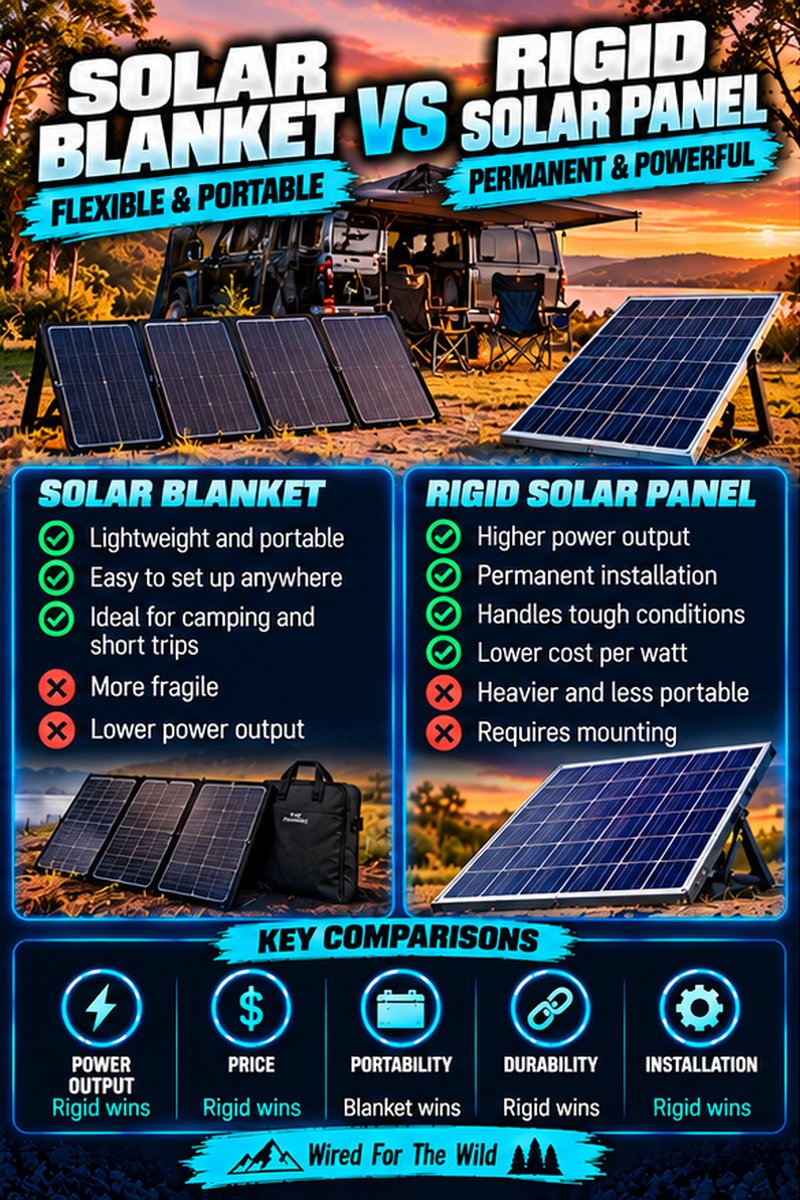
Solar Blanket vs Rigid Solar Panel for 4WD Camping
Portability, output, durability and price compared, so you can pick the right solar for weekends away or long trips.
Read guide →How to Calculate Your 12V Power Needs for Camping
Work out how much 12V power you use in a day at camp: watts, hours, fridges that cycle, inverter losses and a margin, with a worked weekend example.
Read guide →