Lithium Batteries in Cold Weather: Charging Below Zero
Lithium batteries can run in the cold, but charging them below freezing can damage them.
LiFePO4 (lithium iron phosphate) batteries are popular for camping. They have one weakness: charging them below about 0°C can damage the cells. Always check your battery's own data sheet for its limits.
1. Discharging vs charging
Most lithium batteries can supply power in the cold, within the maker's limits. Charging is the risk. Below freezing, charging can cause permanent damage inside the cells.
2. Low-temperature protection
Many lithium batteries have a battery management system (BMS) that blocks charging when the cells are too cold. That's why a lithium battery might "refuse" to charge on a frosty morning, then start once the sun warms things up. It's protecting itself.
3. Heated batteries
Some batteries have a built-in heater that warms the cells before charging. The heater uses some of the charge to do it.
4. Keeping it charging on cold trips
- Mount the battery inside the vehicle or van, not in an exposed spot.
- Expect solar charging to start later on cold mornings.
- Don't try to bypass the BMS cold protection.
5. Quick summary
- Discharging in the cold: usually OK within limits.
- Charging below freezing: not OK unless the battery has a heater.
- A BMS that blocks cold charging is working as designed.
Work on 240V AC wiring, including inverter outputs and mains inlets, must be done by a licensed electrician. For high-current DC gear, follow the maker's installation manual and have an auto electrician check your work if you're unsure.
Related guides
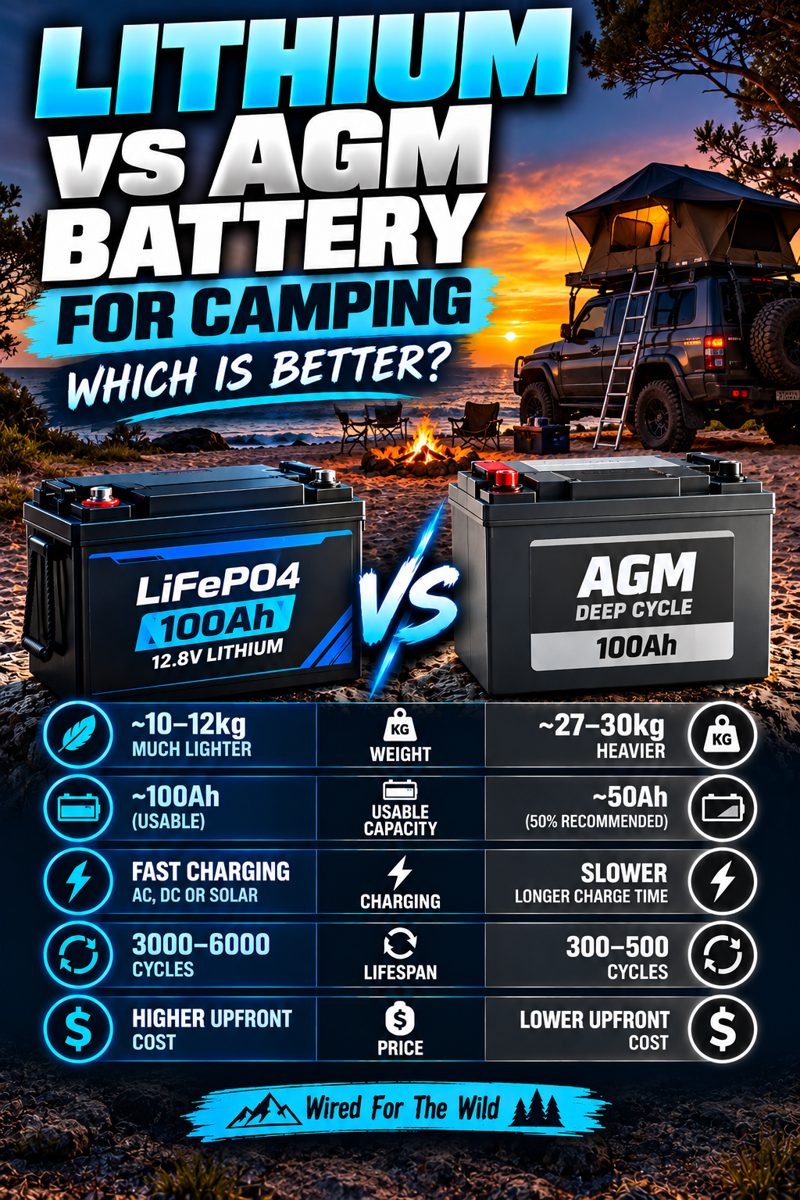
Lithium vs AGM Battery for Camping: Which Is Better?
Weight, usable capacity, charging speed and lifespan compared, so you can decide if lithium is worth the extra upfront cost.
Read guide →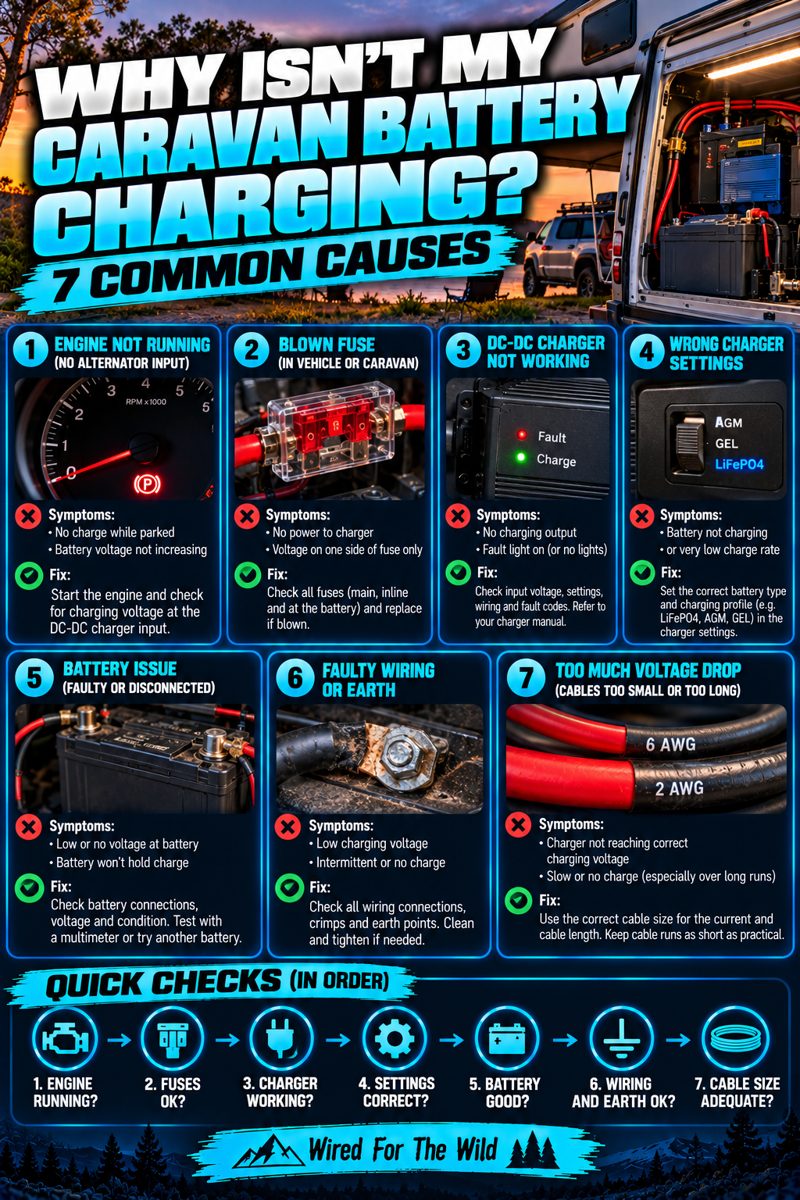
Caravan Battery Not Charging? 7 Common Causes
Work through these seven common causes in order, from the engine to the cable size, to find your charging fault.
Read guide →