Charging a Power Station From Solar: Inputs, Volts and Watts
Match the panels to the power station input and it charges well. Get it wrong and it charges slowly or not at all.
Most portable power stations have a built-in solar charge controller. The panel plugs straight in, usually with no separate regulator.
1. Read the solar input label
Find three limits on the power station or in its manual:
- Voltage range, for example 12 to 60V. The panel's open-circuit voltage (Voc) must stay under the top limit, even on a cold morning when Voc rises.
- Maximum current, for example 10A.
- Maximum watts, for example 200W.
2. Match the panel
- One panel: check its Voc is inside the voltage range.
- Two panels in series: the Voc adds up. Only do it if the total stays under the limit with a safety margin.
- Two panels in parallel: the current adds up. Check it against the current limit.
3. How long it takes
Hours ≈ battery Wh ÷ real solar watts. Real watts are often 50 to 75% of the panel rating at camp. A 1,000Wh station on a 200W panel making 130W real: about 7.7 hours of good sun.
4. Plugs and adapters
Use the adapter the maker supplies or specifies (often XT60 or Anderson to the station's input). Check polarity before you plug in an adapter you made yourself.
5. Quick summary
- Stay inside the input voltage, current and watt limits.
- Series adds volts, parallel adds amps.
- Expect real watts well below the panel rating.
Work on 240V AC wiring, including inverter outputs and mains inlets, must be done by a licensed electrician. For high-current DC gear, follow the maker's installation manual and have an auto electrician check your work if you're unsure.
Related guides
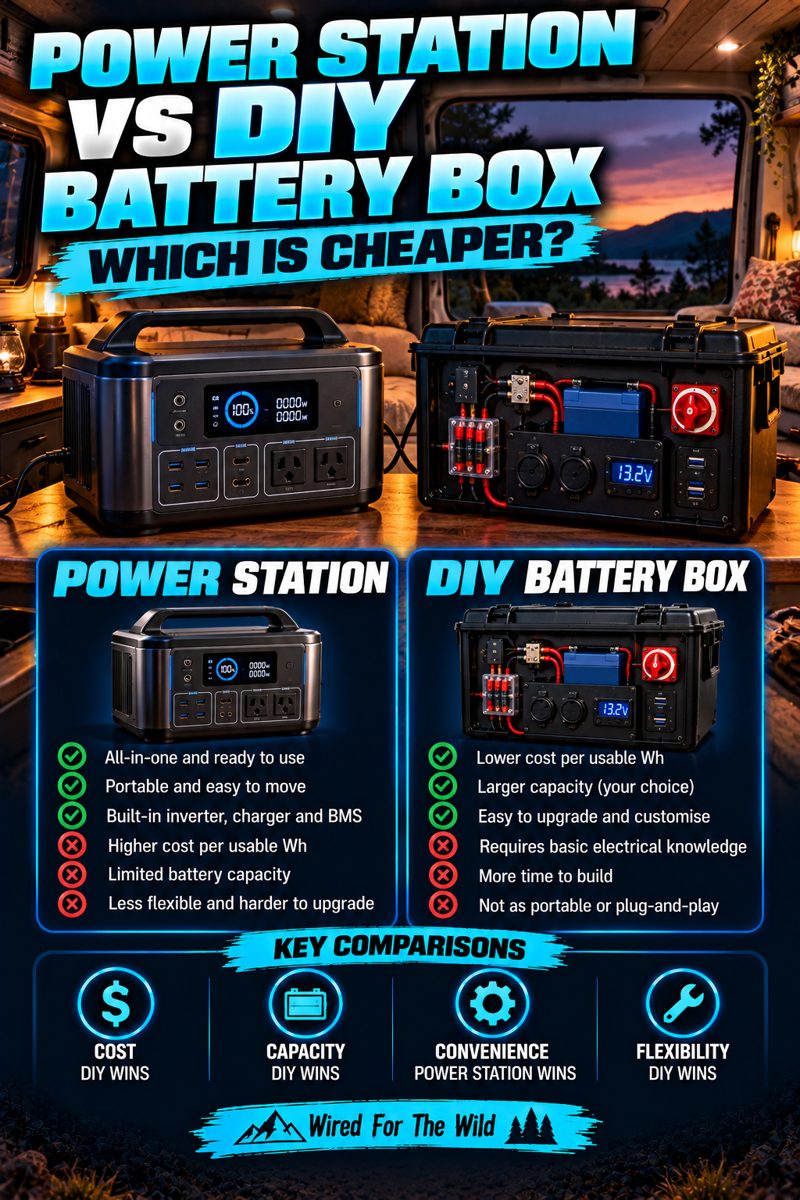
Power Station vs DIY Battery Box: Which Is Cheaper?
Cost per watt hour, flexibility, charging and ease of use compared, to find the best value camping power for you.
Read guide →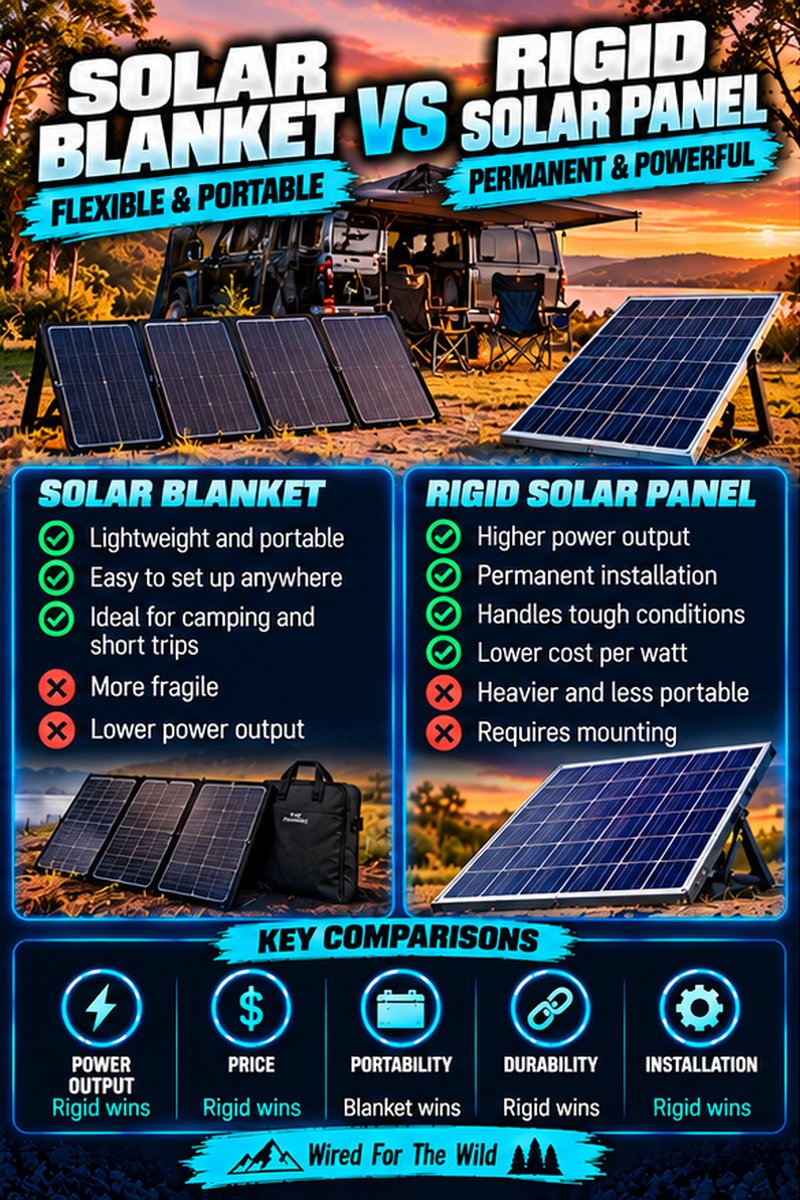
Solar Blanket vs Rigid Solar Panel for 4WD Camping
Portability, output, durability and price compared, so you can pick the right solar for weekends away or long trips.
Read guide →