How to Set Up a 12V Fuse Block in a Caravan or 4WD
One tidy fuse block beats a dozen in-line fuses hidden behind panels. Here is how to plan and wire one.
A fuse block (or fuse box) takes one feed from the battery and splits it into several fused circuits: lights, fridge, pump, USB sockets and so on. Each circuit gets its own fuse, sized for its own cable.
1. Where it goes
- Close to the battery, so the feed cable is short.
- Somewhere dry, ventilated and easy to reach, with room to change a fuse.
- Away from sharp edges, heat and anything that moves.
2. Protect the feed cable
The cable from the battery to the fuse block needs its own fuse or circuit breaker, mounted as close to the battery positive as you can. Size it for the feed cable, not for the total of the small fuses. If the feed is long, check voltage drop as well.
3. Fuse each circuit for its cable
- Each fuse protects the cable after it. It must be above the device's normal current and no bigger than the cable's current rating.
- If the device manual names a fuse size, use that.
- Use the Fuse Size Calculator for a starting point.
4. The negative side
Run each circuit's negative back to a negative bus bar beside the fuse block, then one properly sized cable to the battery negative (or to the battery monitor shunt, if you have one). Don't rely on random body earth points for sensitive gear like fridges.
5. Label everything
Label each fuse position with the circuit name and fuse size. Keep a spare set of fuses in a bag taped inside the lid. When something stops working at camp, a labelled block turns a long job into a two-minute one.
6. Common mistakes
- No fuse at the battery end of the feed cable.
- One big fuse "protecting" several small cables.
- Fuses bigger than the cable can carry.
- Unlabelled positions and no spares.
7. Quick summary
- Short, fused feed from the battery.
- One fuse per circuit, sized for that circuit's cable.
- A matching negative bus bar.
- Label it and carry spares.
Work on 240V AC wiring, including inverter outputs and mains inlets, must be done by a licensed electrician. For high-current DC gear, follow the maker's installation manual and have an auto electrician check your work if you're unsure.
Related guides
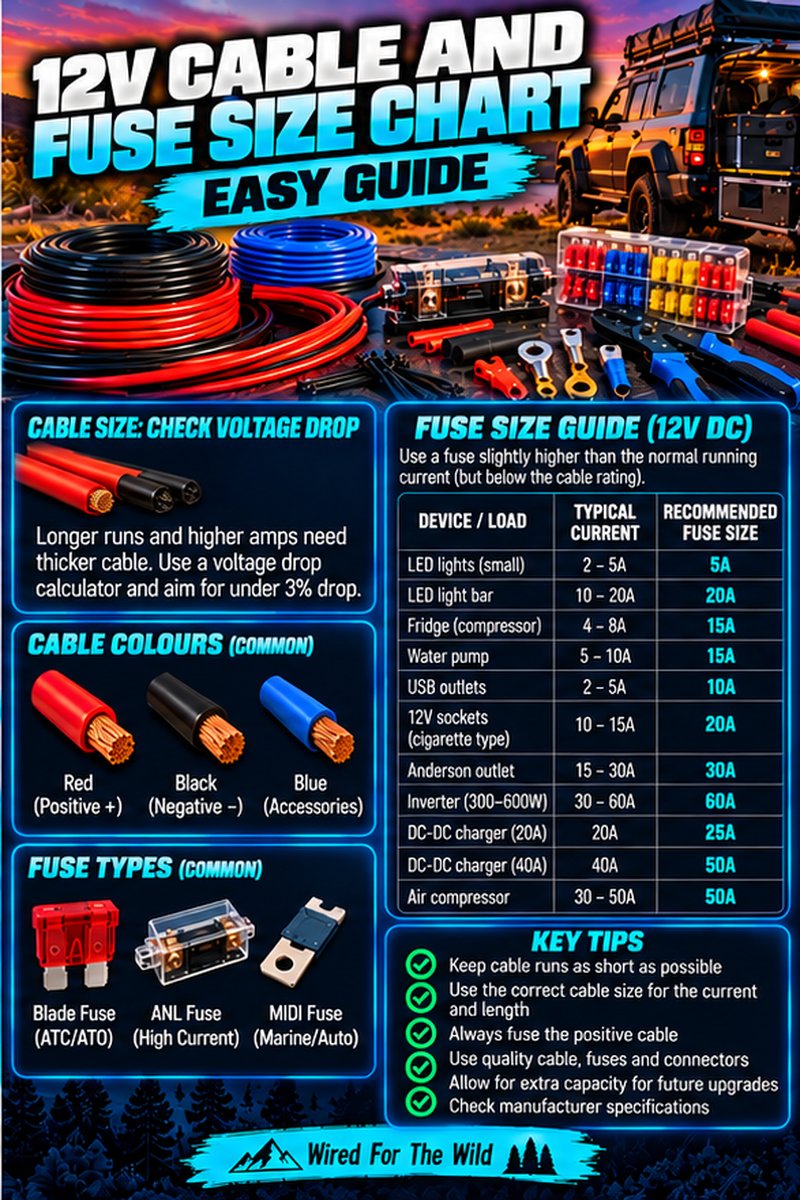
12V Cable and Fuse Size Guide
A simple step-by-step method for choosing 12V cable and fuse sizes, with a worked light bar example, common fuse types and mistakes to avoid.
Read guide →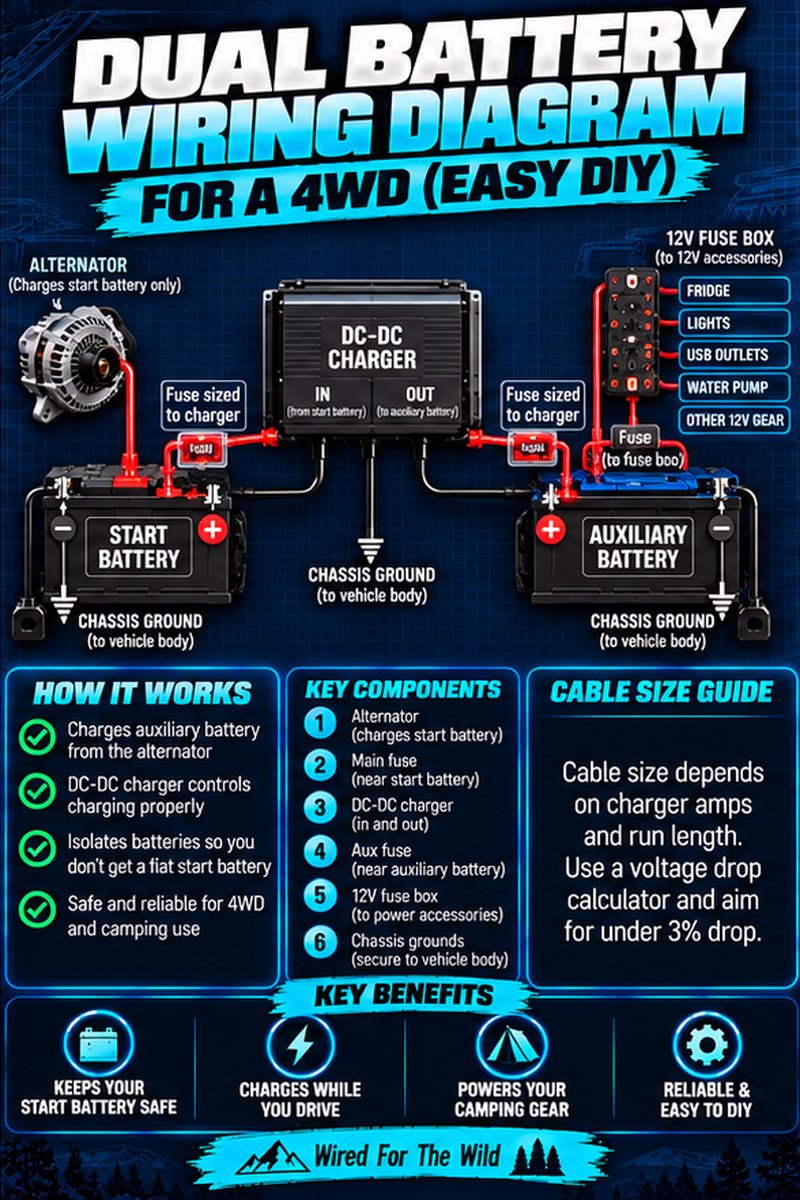
Dual Battery Wiring Diagram for a 4WD
A simple 4WD dual battery layout with a DC-DC charger, fuses and earths: how it works, DC-DC charger or VSR, the parts list and what to get right.
Read guide →